ABA Therapy for Nonverbal Children: Building Communication Skills

In short: ABA therapy uses positive reinforcement and structured teaching to help nonverbal children build communication skills, including gestures, signs, picture exchange, and speech. A BCBA designs a personalized plan, and many insurance plans, including Medicaid, cover ABA services. The free service Autism Therapy Near Me can match your family with qualified providers.
Key takeaways
- ABA therapy can help nonverbal children communicate using methods like PECS, sign language, and vocalizations, tailored to each child's needs.
- A Board Certified Behavior Analyst (BCBA) designs and oversees the therapy plan, ensuring evidence-based practices.
- Early intervention is key; starting ABA before age 5 often leads to better communication outcomes.
- Most insurance plans, including Medicaid, cover ABA therapy for autism; the free matching service helps you find in-network providers.
Find your child's ABA provider
About 60 seconds · free & confidential
- ✓ Vetted, BCBA-led providers
- ✓ In-home, center & telehealth
- ✓ No obligation, ever
Understanding Nonverbal Autism and Communication
When a child is described as nonverbal, it means they do not use spoken language as their primary way to communicate. This can range from having no words at all to using only a few sounds or words. However, being nonverbal does not mean a child has nothing to say. Every child has a desire to connect, express needs, and share experiences. Communication is more than speech; it includes gestures, facial expressions, body language, and alternative methods like pictures or devices. For children with autism who are nonverbal, building communication is a critical step toward reducing frustration, fostering relationships, and increasing independence.
What Does 'Nonverbal' Mean?
The term 'nonverbal' is often used loosely. Some children may be completely nonspeaking, while others may use a handful of words or echolalic phrases. In the autism community, many prefer the term 'nonspeaking' to emphasize that the child can still understand and communicate in other ways. It is important to assess each child's unique profile. A child who is nonverbal may have strong receptive language skills (understanding what others say) but struggle with expressive language. ABA therapy focuses on building the skills needed to express wants, needs, and thoughts effectively, regardless of the mode of communication.
The Importance of Building Communication
Without a reliable way to communicate, children often experience high levels of frustration, leading to challenging behaviors like tantrums, aggression, or self-injury. Teaching communication reduces these behaviors by giving the child a functional alternative. It also opens doors to social interaction, learning, and self-advocacy. For parents, seeing their child communicate for the first time-whether by pointing to a picture, signing 'more,' or saying a word-is a profound milestone. ABA therapy systematically builds these skills, starting with the most basic requests and expanding to more complex exchanges.

🔗 Related reading: Does Private Insurance Cover ABA in New York? · Nearby ABA Therapy
How ABA Therapy Supports Communication in Nonverbal Children
Applied Behavior Analysis (ABA) is a scientifically validated approach that uses principles of learning and motivation to teach new skills. For nonverbal children, ABA can be highly effective in building communication because it breaks down complex skills into small, teachable steps and uses positive reinforcement to encourage progress. Each program is individualized based on the child's current abilities, preferences, and family goals.
Key ABA Techniques for Communication
- Discrete Trial Training (DTT): A structured teaching method where a skill is broken into small steps, each taught with clear instructions, prompts, and reinforcement. For communication, this might involve teaching a child to point to a picture of a desired item.
- Natural Environment Teaching (NET): Teaching communication in the child's everyday environment using naturally occurring opportunities. For example, during snack time, the child is prompted to request a cracker using a sign or picture.
- Pivotal Response Training (PRT): A child-led approach that targets pivotal areas like motivation and initiation. PRT often uses the child's favorite toys or activities to encourage communication attempts.
- Verbal Behavior Approach (VB): Based on B.F. Skinner's analysis of language, VB teaches that words have functions (e.g., requesting, labeling, answering). It focuses on teaching the 'why' behind communication, not just the word.
- Augmentative and Alternative Communication (AAC): ABA therapists often incorporate AAC tools like picture exchange systems (PECS), speech-generating devices, or sign language. These are not 'giving up' on speech but providing a bridge to communication.
The Role of the BCBA
A Board Certified Behavior Analyst (BCBA) is a master's-level clinician who designs, oversees, and adjusts the ABA program. For a nonverbal child, the BCBA conducts a functional communication assessment to identify the child's current communicative behaviors and the most effective reinforcers. They then create a behavior intervention plan that includes specific communication goals. The BCBA trains parents and therapists (Registered Behavior Technicians, RBTs) to implement the strategies consistently. Because communication is so dynamic, the BCBA continuously monitors data and modifies the plan to ensure progress.
Looking for ABA therapy for your child? We match families with vetted, BCBA-led providers near you.
Get matched freeWhat to Expect in ABA Therapy for Communication
Starting ABA therapy can feel overwhelming, but knowing what to expect helps families prepare. The process begins with an assessment and continues with regular sessions that evolve as the child grows.
Assessment and Goal Setting
The first step is a comprehensive assessment, often using tools like the VB-MAPP (Verbal Behavior Milestones Assessment and Placement Program) or the ABLLS-R (Assessment of Basic Language and Learning Skills). The BCBA observes the child, interviews parents, and reviews records. Goals are then written in measurable, achievable terms. For a nonverbal child, early goals might include: 'The child will independently request a preferred item by handing a picture card to an adult in 8 out of 10 opportunities.' Goals are updated every few months based on progress.
Typical Session Structure
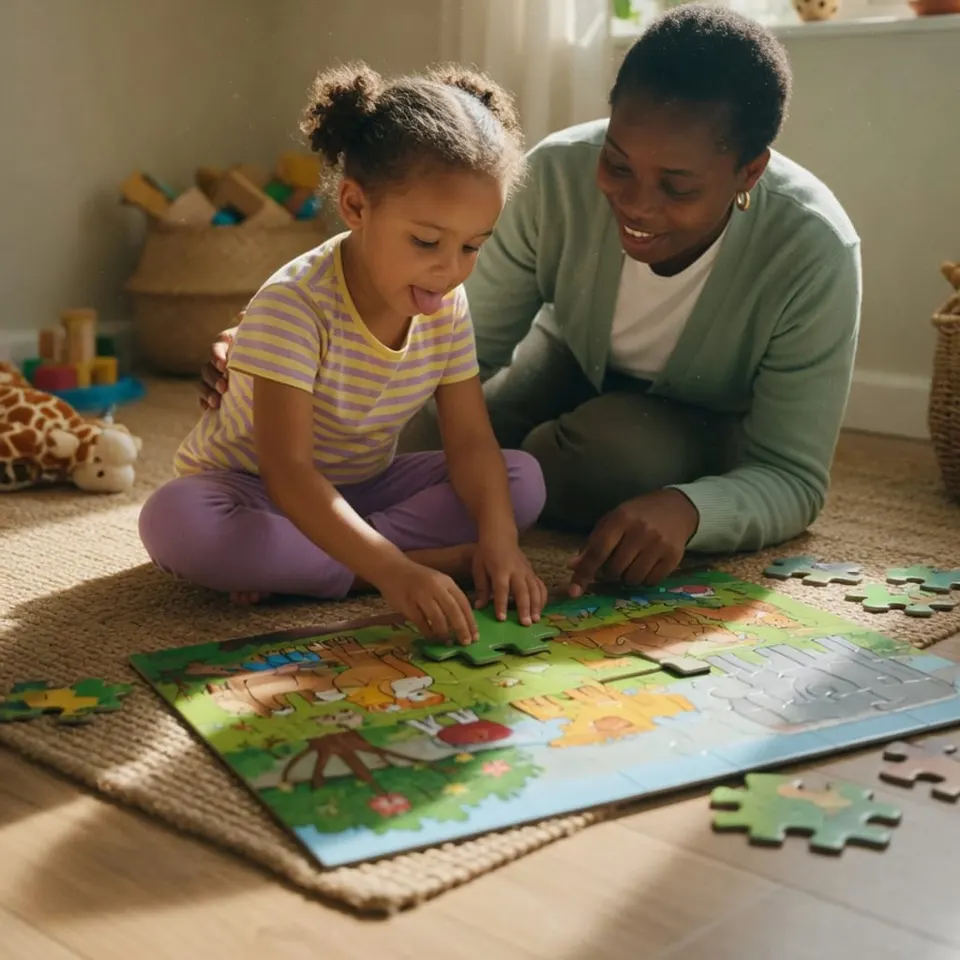
Sessions are usually one-on-one with an RBT, lasting 2-4 hours per day, several days a week. The session includes a mix of structured table work (DTT) and play-based learning (NET). The RBT follows the BCBA's plan, using prompts (e.g., hand-over-hand guidance, verbal cues) and fading them as the child becomes more independent. Reinforcement is key-the child earns access to a favorite toy, snack, or activity for each successful communication attempt. Sessions also include parent training, where the BCBA teaches you how to practice communication skills at home. Over time, the goal is for the child to generalize skills across people and settings.
🔗 Related reading: Summer & After-School ABA in Arkansas · Apply for ABA
Practical Communication-Building Strategies at Home
Parents are essential partners in ABA therapy. The skills learned in sessions need to be practiced in natural routines to become lasting. Here are strategies you can use at home, with guidance from your BCBA.
Modeling and Prompting
Model the communication method your child is learning. If they use PECS, hold up the picture card and say the word while handing it to them. If they use sign language, sign and say the word simultaneously. Use the least amount of prompting needed-start with a simple gesture, then increase if necessary. Always wait a few seconds for your child to initiate; sometimes silence is an opportunity for them to try. Praise any attempt, even if it's not perfect.
Using Visual Supports
Visual schedules, choice boards, and social stories can help nonverbal children understand expectations and make choices. For example, a choice board with pictures of snacks allows your child to point to what they want. A visual schedule shows the sequence of activities (e.g., play, snack, bath) to reduce anxiety. These supports make communication concrete and accessible. Your BCBA can help you create and implement visual tools that align with your child's goals.
Costs, Insurance, and Medicaid Coverage for ABA
One of the biggest concerns for families is the cost of ABA therapy. The good news is that ABA is widely covered by insurance, including many Medicaid plans, thanks to autism insurance mandates. However, navigating coverage can be confusing.
Understanding Insurance Mandates
All 50 states have some form of autism insurance mandate, requiring many private insurance plans to cover ABA therapy. Coverage details vary, but typically include assessment, therapy sessions, and parent training. You may need a formal autism diagnosis and a prescription from a doctor. Check with your insurance provider about deductibles, copays, and annual limits. The free service Autism Therapy Near Me can help you find providers who accept your insurance, saving you hours of research.
Medicaid and Early Intervention Programs
Medicaid often covers ABA therapy for children with autism, and many states have specific programs for early intervention (birth to age 3) that include ABA. For example, through a state's Early Intervention system, a child may receive ABA services at no cost or on a sliding scale. For older children, Medicaid waivers may fund ABA. It is important to contact your state's Medicaid office or a local autism organization for details. The matching service can also connect you with providers experienced in working with Medicaid.
Common Mistakes to Avoid When Seeking ABA for Communication
Families often have misconceptions about ABA and communication. Avoiding these pitfalls can lead to a more positive and effective experience.
Focusing Only on Verbal Speech
It is natural to want your child to speak, but pressuring them to produce words before they are ready can cause frustration and resistance. ABA therapy values all forms of communication. A child who uses a tablet to say 'I want juice' is communicating just as effectively as one who says it aloud. In fact, AAC often supports the development of spoken language by reducing pressure and providing a model. Trust the process and celebrate every step, whether it's a sign, a picture exchange, or a vocalization.
Not Involving the Whole Family
ABA is most effective when everyone in the child's life is consistent. If only one parent practices the communication strategies, progress will be slower. Siblings, grandparents, and teachers should also be trained on how to prompt and reinforce communication. Your BCBA can provide training sessions for the whole family. Consistency across environments helps the child generalize skills faster.
How to Find a Vetted BCBA-Led Provider
Finding the right ABA provider for your nonverbal child can be challenging. You want a team that has experience with communication-focused ABA, uses evidence-based methods, and is a good fit for your family's values. That is where Autism Therapy Near Me comes in. As a free matching service, we connect families with vetted, BCBA-led providers in their area. We take into account your child's age, needs, insurance, and location to recommend providers who have a track record of helping nonverbal children build communication. There is no cost to you-we are simply a resource to make the search easier. Once matched, you can schedule consultations and choose the provider that feels right.
A Path Forward: Hope and Progress
Every child with autism has the potential to communicate. With the right ABA program, patience, and support, nonverbal children can learn to express themselves in ways that transform their lives and their families. The journey may have ups and downs, but each small success-a first picture exchange, a signed 'more,' a spoken word-is a victory. You do not have to navigate this alone. Whether through local support groups, online communities, or the free matching service, there are resources to help you find the right ABA provider and start building communication today.